
Forgotten Freight: Three UPS Crashes That Should Haunt Aviation
Three accidents that faded from public memory, but whose lessons still echo.
WARNING: This article contains graphic and emotional details of major aviation accidents.
This week’s crash of UPS Flight 2976 in Louisville, Kentucky, was absolutely horrific and gut wrenching. No matter what corner of the aviation industry we work in, these accidents affect us deeply.
Footage and coverage of the accident have been all over social media and the news. Visibility into accidents can certainly be a helpful tool in allowing us all to learn from past events to make the industry safer. Aviation has already been under a microscope all year since the mid-air collision in Washington D.C. in January, and even more recently due to staffing delays during the still-ongoing government shutdown.
Will the high visibility of UPS 2976 help awareness on pressing aviation safety issues? Or will it instead lead to political opportunism and conspiracy theories? I worry it may be the latter, but it’s still too early to tell.
“No one’s gonna miss a couple of freight dawgs.”
In the past, cargo accidents were largely ignored, supporting the adage “No one’s gonna miss a couple of freight dawgs.” No matter an aircraft’s size, when there are only two pilots on board, it’s easy for fewer people to notice. In the example of National Airlines Flight 102 in 2013, no one cared about this massive cargo accident in Afghanistan for days until footage of the crash was published; then suddenly it became newsworthy.
Conversely, in an “all eyes on aviation” year, when an accident takes place during daylight hours, in an occupied area, with a giant fireball…all caught on camera from multiple angles, UPS Flight 2976 was bound to get a lot of attention. Sadly, the families of those lost will also have to endure that footage being replayed over and over.
UPS has a strong and safe operation, but they have had a few accidents over the last two decades that are largely unknown, or simply not remembered. Maybe because one was a cargo flight that took place overseas, or one wasn’t fatal, or happened in a grassy field before sunrise with no cameras around, these accidents do not sit in the front of people’s thoughts.
Let’s refresh our minds of the sacrifices of others.
Birmingham 2013: A “Casual” Crash
Sometimes it’s incredible how easy it can be to crash an airplane.
UPS Flight 1354 was a pretty mundane flight. Some might call it boring. An Airbus A300 that departed Louisville, Kentucky, heading to Birmingham, Alabama, arriving about an hour and a half before sunrise on August 14th.
It was dark. It was a short cargo flight. The two pilots woke up around 2:30am after less than 3 hours of sleep each, and headed into work.
If I were a pilot operating this, I admit that in my head I’d probably be thinking “Just let me get this effing flight over with.”
I don’t usually talk about how much experience pilots have, but I want to emphasize that these weren’t rookies by any means. Captain Cerea Beal, Jr. had over 6,400 total hours, more than 3,200 of which on the A300. He certainly knew his way around this ugly aircraft. First Officer Shanda Fanning had over 4,700 total hours and more than 400 in the ‘Bus; a respectable amount.
They probably wandered into the flight deck, sipping their coffee as they flipped a few switches and made all the pretty lights come alive. Once the Cockpit Voice Recorder was activated, and later read by the NTSB, you’d hear their immediate conversation topic was sleep. Specifically, how their schedules weren’t giving them the amount of rest they felt they needed, and that passenger airlines’ rules were much more accommodating for safety.
“...it should be one level of safety for everybody,” said Captain Beal, to which FO Fanning replied “It makes no sense at all.”
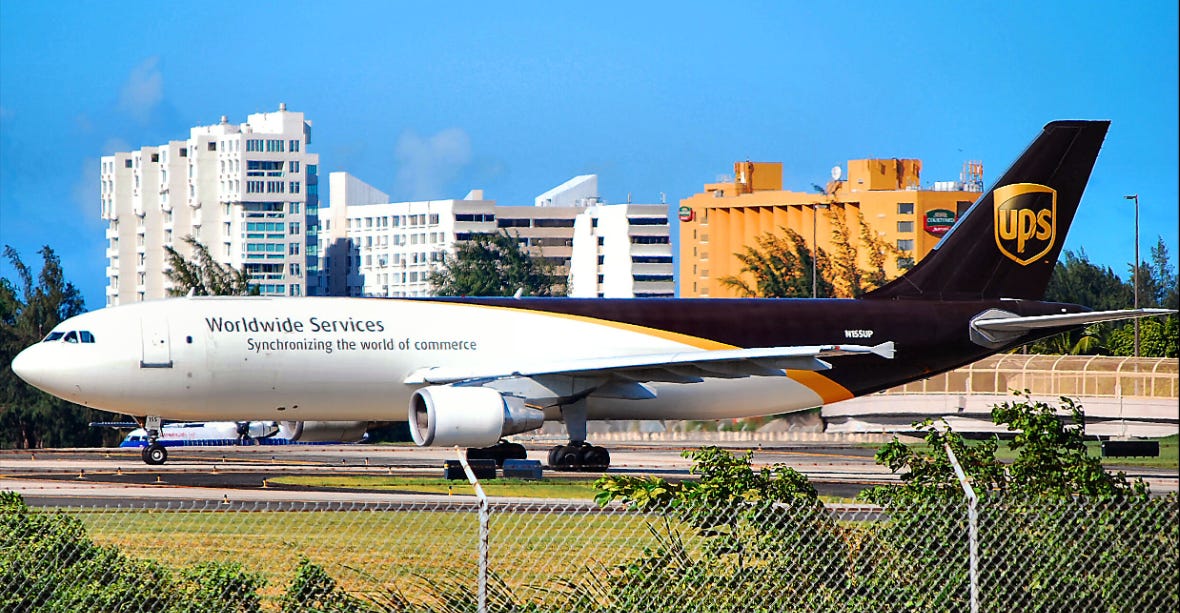
Everything about the flight was pretty routine until the descent, when a series of otherwise common and relatively minor things occurred to make a “swiss cheese model” sandwich.
First, the preferred runway at Birmingham, 6/24, was posted as closed until 5:00 a.m. That runway had a precision approach, but since it was too early, the crew of 1354 had to use runway 18, which was a non-precision runway. No big deal, though. These are talented pilots and they’ve done non-precision approaches many times before and there is no sacrifice in safety with the runway change.
Though non-precision, a descent profile can be plugged into the flight management computer (FMC) to assist. The First Officer did not properly program this. Though a “discontinuity” error appeared, the FO didn’t address it. When the Captain sought profile guidance and saw that it wasn’t there, he just switched to a different mode that used vertical speed inputs instead.
He didn’t communicate this right away to his First Officer.
Weather reports provided to the pilots indicated broken clouds varying between 600 and 1,300 feet above the ground. In actuality, Flight 1354 was going to experience broken clouds as low as 350 feet on the approach.
As they descended through 450 feet above the ground, which was their “Minimum Descent Altitude,” they were still in the clouds. Let me be clear: without the runway in sight (along with a few other stabilized approach parameters), they should have performed a go around at this point, but they pressed on.
Captain Beal had earlier set his descent rate to 1,500 feet per minute, which was a tad aggressive for this lower altitude, at least according to the Enhanced Ground Proximity Warning System (EGPWS), which gave two audible “SINK RATE! SINK RATE!” notifications. Beal rolled the vertical speed dial from 1,500 FPM to 600, then 400.
They finally broke through the clouds at 350 feet. They called the runway in sight, which they should have been able to do sooner. With no profile guidance, and no good visual cues at night, they were calm as could be. In reality, they were 3 seconds away from flying this 147-foot wide aircraft through the tops of trees over a mile short of the runway.
“Oh, shit!” said the Captain, followed by “TOO LOW! TERRAIN!” from the EGPWS, a tad late. “Oh, did I hit something?” added Beal, who finally leapt into action, but there was nothing that could correct it at this point.
The aircraft impacted the ground with the entire forward section separating and sliding over 1,000 feet while the wings and rear of the aircraft tumbled and burst into flames. Though they avoided the fireball behind them, the nose and the bottom of the Airbus were crushed by the crash, sending the flight deck and its floor upward, killing both pilots with blunt force trauma.
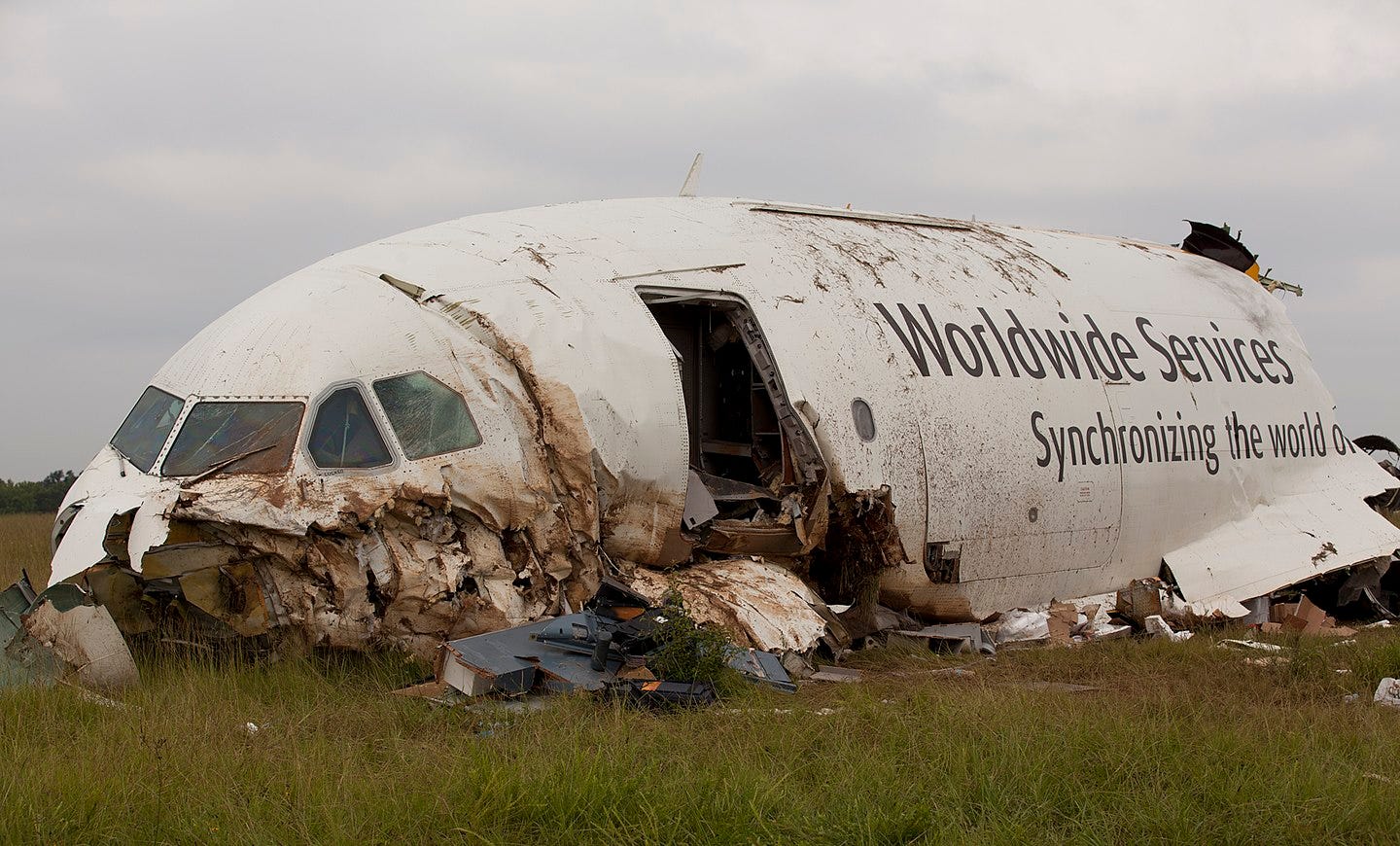
They calmly and quietly flew the airplane into the ground. There was no inflight fire, no panic ahead of striking trees, and otherwise no dramatic lead up. Flying a little tired in the dark, along with a computer error, a cloud a little lower than expected, and not aborting landing when they should have, these were just two pilots thinking they were 20 seconds from a simple touchdown on the runway, and hopefully 90 minutes from resting their head on a hotel pillow.
Philadelphia 2006: Where there’s smoke…
The thing about fire on an aircraft is that the clock is ticking, and it is no cliche to say that every second counts.
After descending through 31,000ft on their descent toward PHL, the First Officer of UPS Flight 1307 commented that he smelled the scent of burning wood. With no cargo smoke indications or other signs of actual trouble, the crew thought the smell could be from flying over a forest fire or some unique form of cargo, so they continued toward their scheduled destination.
Not completely ignoring the problem, they continued to discuss the smell. After ATC instructed this Douglas DC-8 to descend to 6,000 feet, the Flight Engineer (the DC-8 has a 3-person crew!) went back into the main cargo compartment to investigate. He reported that the smell was stronger in the back, but there was no sign of smoke.
Minutes later while descending through 3,600 feet, exactly 20 minutes after first smelling burning wood, the FE announced “We got cargo smoke,” leading the Captain to declare an emergency and start the response to have fire trucks meet the aircraft on arrival.
A minute after that, the Flight Engineer reported “...a lower aft cargo fire section C.” The pilots then donned their oxygen masks.
By the time they touched down on the runway, just 5 minutes after confirming there actually was smoke, the flight deck was filled with that smoke. When the aircraft came to a stop, the 3 crew members immediately evacuated out of the L1 door via slides.
Even though there were fire trucks standing by, fire burned through the ceiling of the back half of the aircraft, damaging the airframe beyond repair.
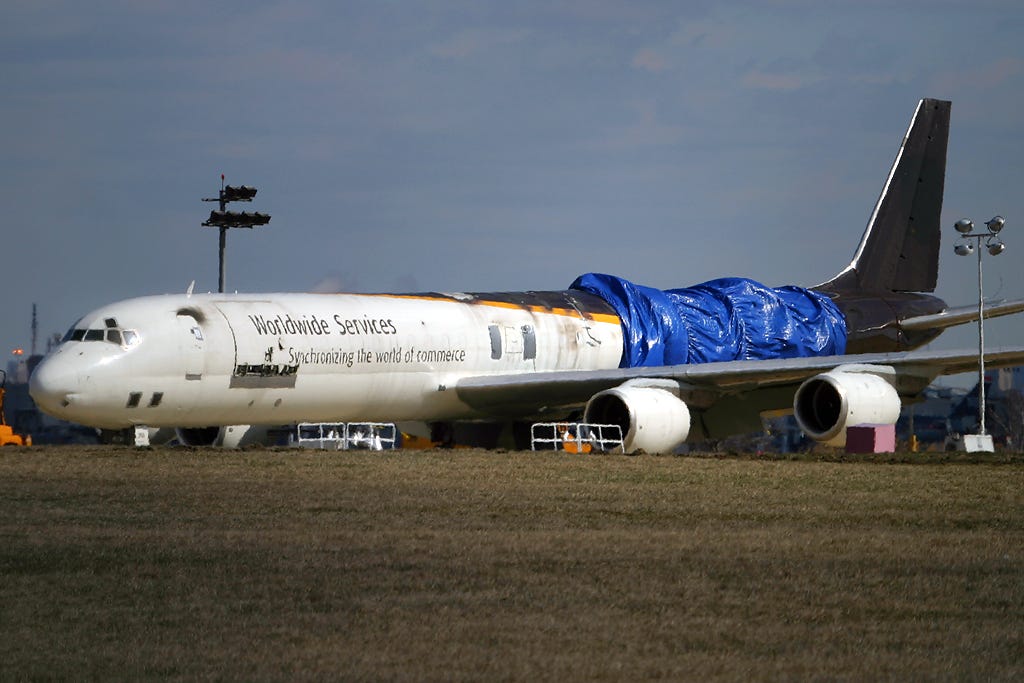
Imagine if they hadn’t already begun their descent? Considering how quickly smoke and fire started to consume the aircraft, a delay of even a few minutes could have easily incapacitated the crew and cost them their lives.
The cause of the fire was never confirmed, but it is suspected that lithium ion batteries were the culprit.
Thankfully, everyone survived, but that may also be why so few people remember this event.
Dubai 2010: Flying Blind
If only they could all end happily and safely.
A 747-400 can easily carry 400 people, and as much as 660, but the cargo variant often carries just two: the pilots. If one crashes overseas, flying at night, with no cell phones watching, you have a recipe for two forgotten pilots in what I feel is one of the most sad and most scary accidents of all time.
UPS Flight 6 departed Dubai International Airport just after sunset, headed to Germany’s Cologne Bonn Airport. Their flight would last almost an hour, but ended just ten miles from where it began.
At 7:12pm, less than 20 minutes after leaving the airport, they were about 120 miles away over the Persian Gulf when the crew received an indication of a fire in the forward cargo deck. They declared an emergency and turned the aircraft around.
Three minutes later, smoke was already filling the flight deck and Captain Douglas Lampe turned off the autopilot, only to notice that they had lost elevator control; the fire had already eaten through the primary flight control system. They’d need to rely on the autopilot from here on out.
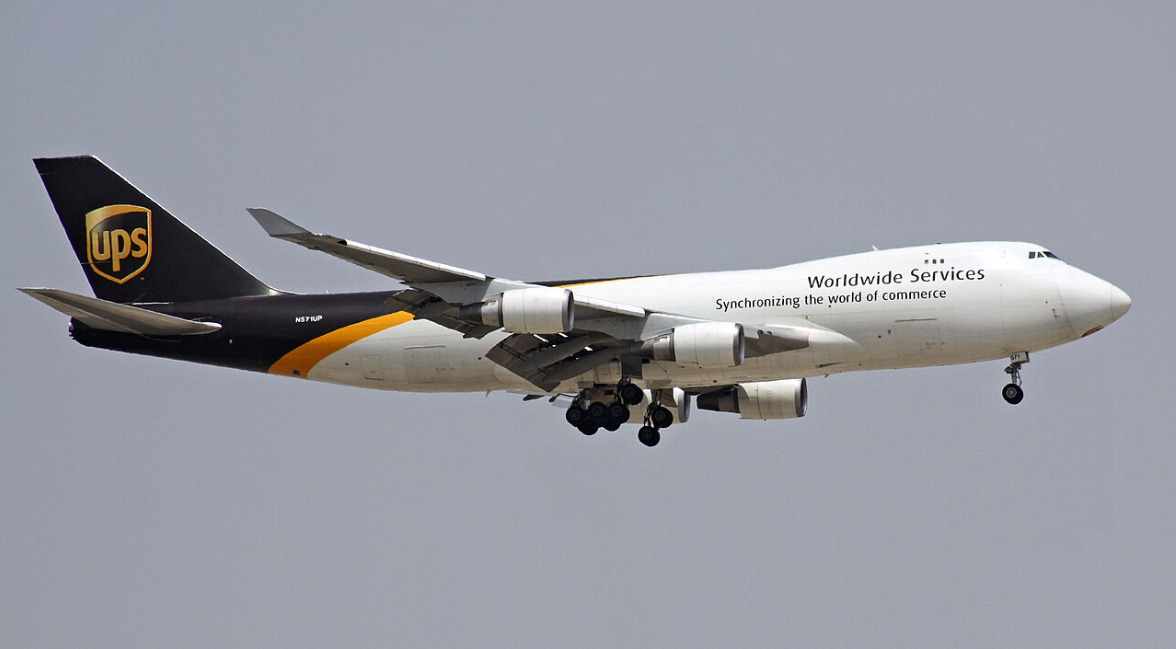
By 7:19pm, something somehow even more urgent emerged. Captain Lampe’s oxygen mask started to fail him, likely due to melted lines. Before leaving his seat to retrieve reserve oxygen, he gave control of the aircraft to First Officer Matthew Bell.
On the Cockpit Voice Recorder, you could hear Douglas Lampe blindly rummaging around the jumpseat area looking for oxygen. His final recorded words were “I can’t see,” before he lost consciousness on the flight deck floor.
First Officer Bell was now left to handle 673,000 pounds of burning airplane on his own. With smoke already making it impossible to see his instruments, he was unable to change radio frequencies on his way back to Dubai. For the remainder of the flight, all of his communications with Air Traffic Control were relayed through other aircraft flying in the area. This also meant that all information was delayed in transit.
Through luck, the runway was pointed right at the aircraft from pretty far out. Bell knew that intercepting the Instrument Landing System (ILS) was his best shot at getting his ailing aircraft to the ground safely, but he had everything else working against him. As more and more systems started to become unresponsive, all Bell could do was ask other aircraft to then ask ATC what his speed, altitude, and heading were. Since the autopilot was the only thing still working to control the aircraft, Bell was likely operating it by pressing his mask right up against the dials at the top of the panel in order to see them; those dials were probably the ONLY thing he was able to get a visual on in the flight deck, including being completely unable to see out the windows. He was literally flying blind.
“What is my altitude, and my heading? My airspeed? Altitude? Altitude? Give it to me now!”
- First Officer Matthew Bell
I think it’s no spoiler that this event does not end well, but considering the conditions, Bell made it remarkably and heroically close. He managed to get the aircraft to skim the top of the ILS beams: his heading and altitude were good, but at 350 knots, he was going much too fast for the computer to intercept. Unable to slow down efficiently, he simply flew more than 4,000ft right over the top of Dubai Intl Airport.
In a desperate attempt to get somewhere, he tried to make his way toward Sharjah International Airport, but accidentally turned in the wrong direction.
Still unable to see his instruments, and with the fire consuming more control elements of the aircraft, the 747 became less responsive. Bell could do nothing but desperately try to get more speed, altitude, and heading updates as the aircraft started to descend uncommanded.
The Ground Proximity Warning System yelled at Matthew with everything in its book: “TOO LOW, TERRAIN. TOO LOW, GEAR. SINK RATE. PULL UP. PULL UP. SINK RATE. PULL UP. PULL UP. PULL UP. PULL UP.”
No matter how much he pulled back on the yoke, the aircraft had nothing left to give.
At 7:42pm, less than a half hour after they realized there was a fire on board, the right wing of the aircraft struck the ground at Nad Al Sheba military camp, starting the crash, explosion, and a debris field that stretched almost a half mile.
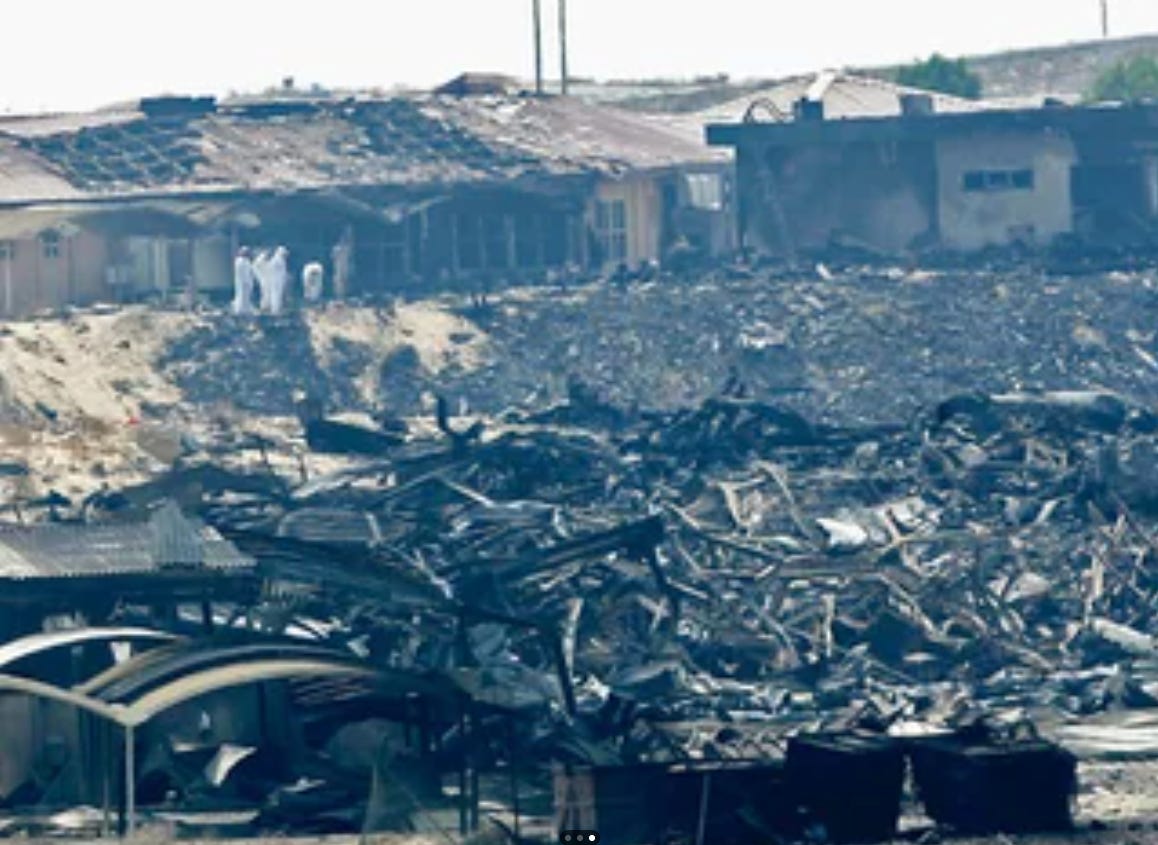
No one on the ground was killed. With his Captain believed to have already died due to smoke inhalation, First Officer Matthew Bell was the only person who died in the impact of this 232-foot long aircraft.
No matter how dire it looked, while facing blindness, extreme loneliness, and probably aware of the futility of his actions, Matthew Bell offered no signs of giving up the entire time.
Delivering What Matters
Though they may have taken time to sink in, these accidents did reshape how we operate today.
Our industry has taken rest rules and fatigue more seriously. Requirements for rest have become tighter, and crews are more likely to be comfortable to “call fatigue” to avoid operating when tired.
We continue to underscore the value of communication in the flight deck and our need to speak up if something seems out of place. Crew resource management (CRM) continues to evolve as a result.
Fire is the big one. I can’t think of anything more frightening on an aircraft. Two of these accidents remind us of that, and our industry has grown as a result. It took too many examples, but we finally take the carriage of lithium ion batteries very seriously. With regard to smoke, our industry now has devices such as the smoke hoods made by VisionSafe that would have given Matthew Bell the advantage he needed (I wrote more about this in a LinkedIn article).
Cerea Beal, Jr., Shanda Fanning, Douglas Lampe, Matthew Bell, and the 3 surviving crew members in Philadelphia, all went through hell to teach us something valuable, and to make us safer each day. Their names should be a part of every successful landing.
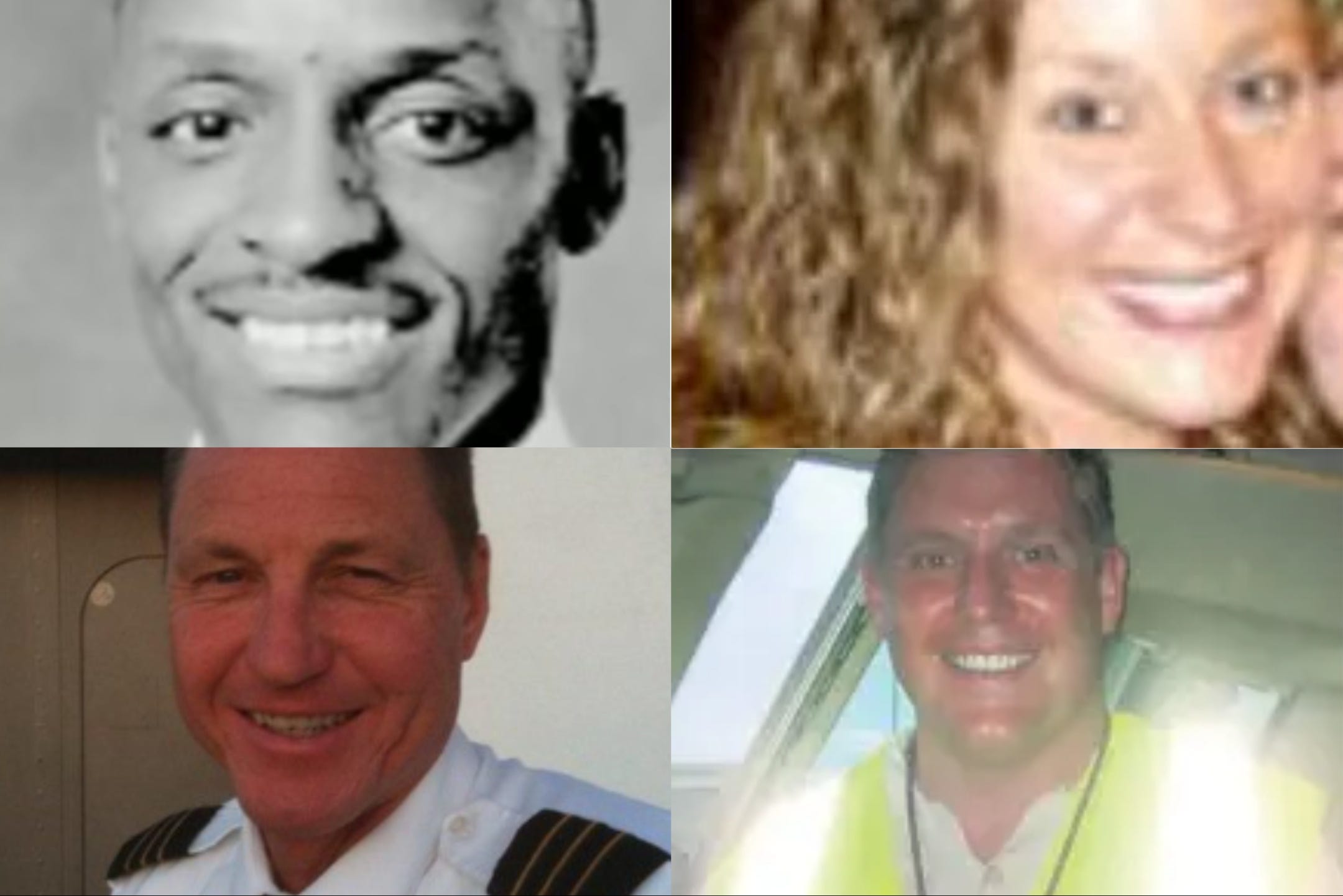
I think the saying is wrong. I never met them, but I certainly do miss these freight dawgs.
If you have a question about aviation, my career, or a story request, please email me at phildernerjr@gmail.com.
Disclaimer: Products and services mentioned in this article are not via sponsorship or compensation of any kind.
Disclaimer: The views expressed in this article are solely my own and do not represent the positions of my employer or any affiliated organizations. This content is for informational purposes only and is not intended as professional advice.